
Introduction
When preparing a home for sale, most homeowners ask the wrong question.
They ask how to decorate the home. Which colors to paint the walls. Whether to replace the countertops. Whether to add new fixtures in the bathroom. These are reasonable questions, but they are not the questions that determine whether a home sells quickly or sits on the market for months waiting for an offer that never arrives at the right number.
The better question is this: how do you design a home so that buyers fall in love with it?
There is a meaningful difference between decorating and staging, and understanding that difference is one of the most valuable things a Realtor can communicate to a seller before a listing goes live. Decorating reflects the homeowner’s personal taste. Staging is about creating an emotional experience that allows buyers to imagine themselves living in the home, and those two objectives require entirely different approaches to how a space is designed and presented.
At Harvard Home Services, the best-staged homes we have worked on across Washington DC, Maryland, and Northern Virginia share three design principles. None of them require expensive furniture or significant renovation. All of them require intentional thinking about how buyers will experience the space before a single piece of furniture is moved.
You can see what that approach looks like in practice across our most recent work here: https://harvardhomeservices.com/recent-staging-projects/
1. Begin With a Vision, Not Furniture
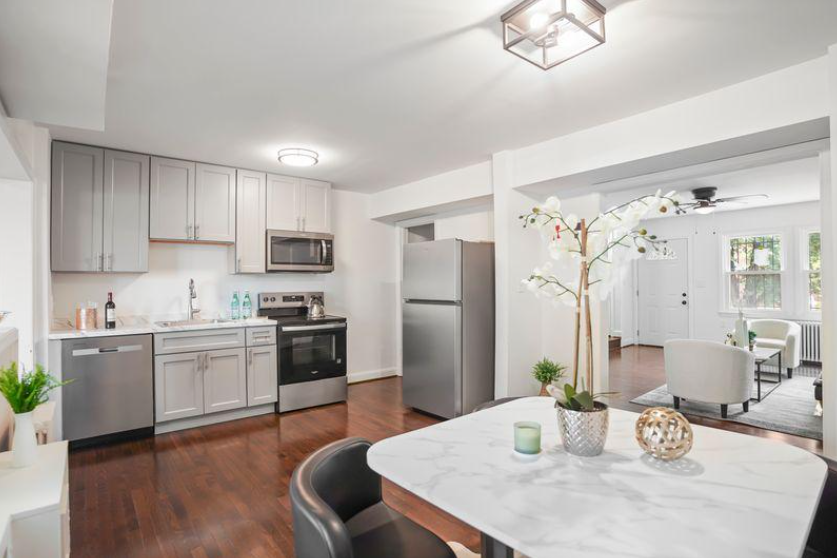
Professional home staging always begins with a plan.
Before anything is placed in a room, the right questions to ask are: what should buyers feel when they enter this space? Where should their eyes naturally be drawn? What story should this room tell about the life that could be lived here? Every room in a staged home should have a clear and immediate purpose. A living room should communicate conversation and relaxation. A dining room should make buyers picture family gatherings and entertaining. A primary bedroom should feel like a calm, private retreat from the rest of the world.
One of the most consistent mistakes homeowners make when preparing to sell is filling rooms with furniture they already own rather than selecting pieces that actually showcase the architecture and proportions of the space. The furniture a family has lived with for years was chosen to suit their life in that home. It was not chosen to help a stranger walking through for the first time understand the home’s full potential. Those are two very different objectives, and confusing them is one of the primary reasons otherwise well-located, reasonably priced listings sit longer than they should.
Professional staging starts with the emotional experience the room should create and then uses furniture and design to support that vision. When the process runs in reverse, with furniture placed first and atmosphere considered second, the result is a space that feels occupied rather than presented. Buyers respond to that difference immediately, even when they cannot articulate exactly what they are reacting to.
For a closer look at how buyer psychology shapes the way people experience a staged home: https://harvardhomeservices.com/home-staging-dopamine-buyer-psychology-washington-dc/
2. Layer the Design to Create Warmth
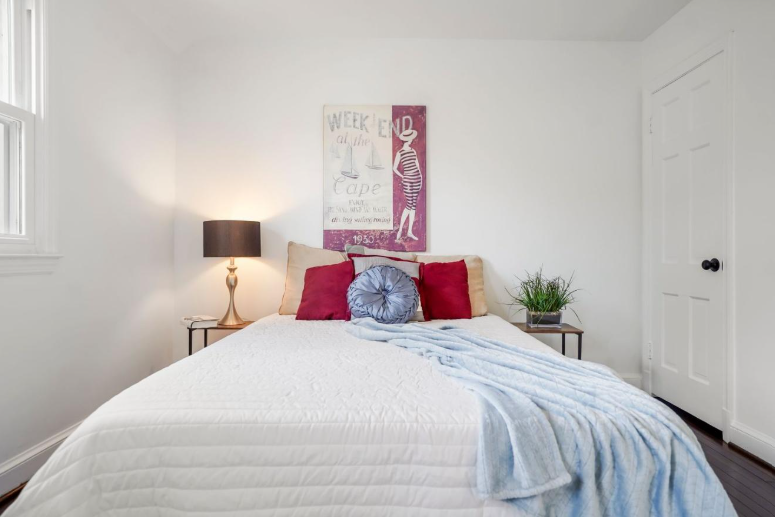
Many homes look finished but very few actually feel complete, and that distinction is what separates listings that generate strong emotional responses from listings that buyers politely move on from.
The difference comes down to layering.
Professional home stagers build each room in stages rather than furnishing it all at once. The foundation comes first: properly scaled furniture, open walkways that allow buyers to move through the space naturally, and clear focal points that give the eye somewhere to land when entering a room. Once the foundation is in place, supporting elements are added. Area rugs that define zones within an open plan. Lighting that creates warmth rather than simply illuminating a space. Artwork that adds visual interest without drawing too much attention to itself. Mirrors that expand the perceived size of a room. Window treatments that frame natural light rather than blocking it.
Finally, carefully chosen accessories complete the room at the detail level. Greenery that introduces life and organic texture. Throws and decorative pillows that communicate comfort without overwhelming a neutral foundation. Books, natural materials, and elegant objects placed deliberately rather than accumulated over time.
Lighting is one of the most consistently overlooked elements in home staging and one of the highest-impact changes a seller can make before a listing goes live. Natural light should always be maximized, but layered lighting, the combination of table lamps, floor lamps, accent lighting, and subtle uplighting, creates warmth that buyers subconsciously associate with comfort and quality. This matters especially during evening showings and professional photography, where the difference between a well-lit and a poorly lit room can be the difference between a listing that generates showing requests and one that buyers scroll past.
Texture works alongside lighting to create the sense of richness that makes a staged home feel more expensive than its price point. Rather than relying on bold color, professional staging combines soft linens, warm woods, velvet, woven materials, glass, stone, and greenery to build visual depth without overwhelming a buyer’s ability to project themselves into the space. The result is a home that feels sophisticated, welcoming, and timeless rather than trendy or overly personalized.
3. Balance, Scale, and Flow Matter More Than Expensive Furniture
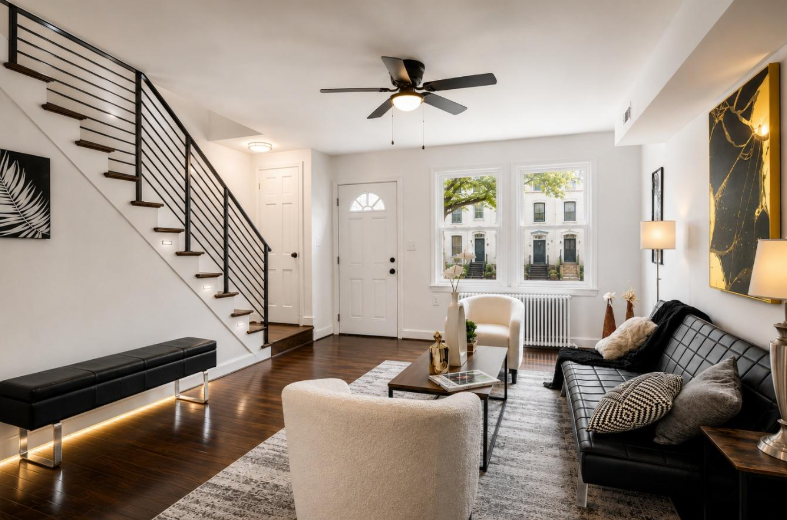
Luxury in a home is not determined by price. It is determined by proportion.
One oversized sofa can make an otherwise well-proportioned room feel cramped and hard to move through. Furniture that is too small for a space leaves rooms feeling empty and awkward in a way buyers find difficult to overlook. Professional stagers select furniture that fits the room being staged rather than furniture that happened to work in the homeowner’s previous house or that was purchased to suit a different floor plan entirely.
Visual flow is equally important and equally misunderstood. When buyers walk through a home, their eyes should move naturally from one attractive feature to the next. Furniture placement should encourage movement through the space while highlighting the architectural features that make the property worth buying: fireplaces, large windows, built-in shelving, outdoor views, ceiling height, original hardwood floors. A properly staged room feels effortless to move through because every decision about placement was made with the buyer’s physical experience of the space in mind.
When a room is designed with balance, scale, and flow, nothing competes for attention and everything works together. This is where professional staging differs most visibly from decorating. The goal is not to impress buyers with expensive furnishings. The goal is to make buyers notice the home itself, to help the architecture and proportions of the property communicate their value without any single object distracting from that message.
How a home is experienced physically during a showing is closely connected to how it is experienced digitally in listing photography. Both dimensions matter in today’s market: https://harvardhomeservices.com/2d-vs-3d-home-buying-experience-staging/
Why These Principles Sell Homes
Today’s buyers often decide whether to visit a property within seconds of seeing it online. The listing photograph is the first showing, and in most cases the listing photograph is the one that determines whether any physical showing ever happens at all.
Once buyers arrive at the home, emotion takes over from evaluation. They are not running through a checklist of square footage and comparable sales. They are imagining birthday dinners in the dining room, holiday mornings in the living room, quiet evenings on the patio, and the particular feeling of walking into a space that already feels like theirs. Thoughtful staging does not manufacture that feeling. It creates the conditions for buyers to find it on their own.
A professionally staged home appears brighter, larger, more organized, and more valuable than the same home presented without staging, and the effect is not subtle. Buyers spend less time focused on imperfections and more time imagining themselves living there. That shift in attention is what generates stronger offers, more showing activity, and fewer days on market. It is also why professionally staged homes consistently outperform unstaged listings in the DMV market regardless of price point.
For sellers preparing to list in the Washington DC, Maryland, and Virginia market, understanding whether staging is right for a specific property and timeline: https://harvardhomeservices.com/will-home-staging-help-sell-faster-washington-dc/
And for Realtors evaluating physical staging against virtual alternatives for a specific listing: https://harvardhomeservices.com/virtual-vs-physical-staging-washington-dc/
Great Staging Is Great Design
At Harvard Home Services, home staging is not about placing furniture in empty rooms. It is the combination of interior design, buyer psychology, marketing awareness, lighting strategy, and intentional presentation working together in a way that makes every room in a home easier for buyers to connect with.
Every decision, from the placement of a chair to the height of a lamp to the texture of a throw, is made with one objective in mind: helping buyers emotionally connect with the property in a way that moves them from interested to committed.
When design supports that emotional connection, buyers do not just see a house. They begin imagining it as their home.
The staging work shown throughout this post comes from a Washington DC townhouse at 824 20th Street NE, Washington DC 20002, staged by Harvard Home Services in June 2026.
Work With Harvard Home Services
Whether you are selling a condominium in Washington DC, a townhouse in Northern Virginia, or a family home in Maryland, professional staging will improve your home’s first impression, its perceived value, and its performance in the market from the first showing forward.
https://harvardhomeservices.com/contact/
https://harvardhomeservices.com/services/
https://harvardhomeservices.com/about/