
Every day homeowners are bombarded by social media telling them what their home is missing. A new mirror. A trendy accent chair. A colorful statement wall. An oversized piece of artwork. Another dozen decorative accessories carefully arranged to look effortless.
The message is always the same: your home is not complete until you buy this.
For Realtors, this creates a real challenge. Many sellers spend months following decorating trends that make perfect sense on social media but actively work against them when it is time to list. The goal of a listing is not to showcase personal taste. The goal is to help the largest possible pool of buyers see themselves living in the home. Those two objectives are often in direct conflict, and understanding that distinction is one of the most valuable conversations a Realtor can have with a seller before a property hits the market.
At Harvard Home Services, we help agents and their sellers navigate exactly this challenge. The concept we return to again and again is one we call de-influencing. It is not about minimalism and it is not about stripping a home of character. It is about being honest about what actually adds value to a buyer’s experience versus what simply looks compelling on a phone screen.
The de-influencing conversation happening in interior design right now is worth understanding in full. This video breaks down the concept clearly and covers the specific types of purchases that feel like upgrades but work against a home’s presentation over time: https://youtu.be/JjUGVsIydpQ?si=GAiLwNrORy_cj3G8
For a broader look at how presentation affects days on market and final sale price in the DMV, the data is covered here: https://harvardhomeservices.com/will-home-staging-help-sell-faster-washington-dc/
What De-Influencing Actually Means
De-influencing is the practice of questioning whether something in a home truly adds value to the buyer experience or simply creates the appearance of value for the person living there.
Social media is engineered to generate urgency. It creates a low-level sense of insecurity that tells homeowners their spaces are unfinished, outdated, or lacking unless they purchase whatever is being promoted that week. For someone living in a home long-term, some of that input is harmless. For someone preparing to sell, it can be genuinely damaging to the listing. Every layer of personal style, trend-driven décor, and accumulated personality that gets added to a home makes it incrementally harder for buyers to project their own lives onto the space.
Buyers do not purchase trends. Buyers purchase feelings.
When a buyer walks through a property, they are subconsciously asking a series of questions. Can I see myself living here? Does this home feel peaceful? Does it feel larger than it is? Does it feel well cared for? Does it fit the life I am trying to build? The answer to every one of those questions is almost never found in another decorative object. It is found in how the space feels when it is calm, balanced, and visually uncluttered.
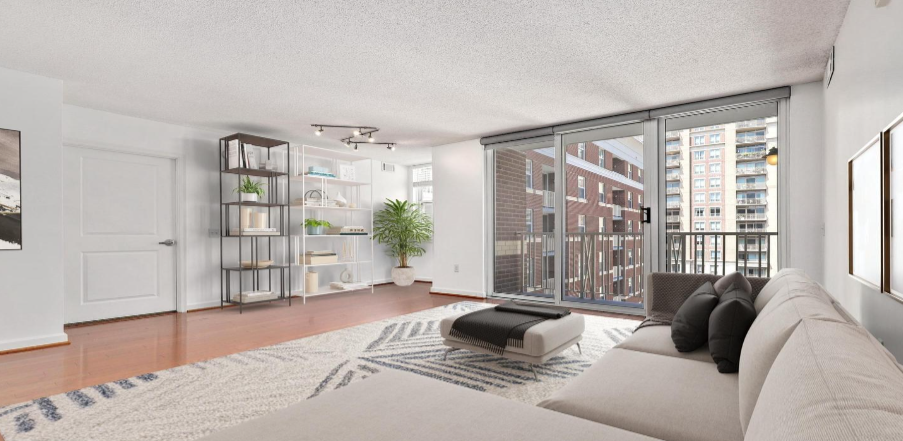
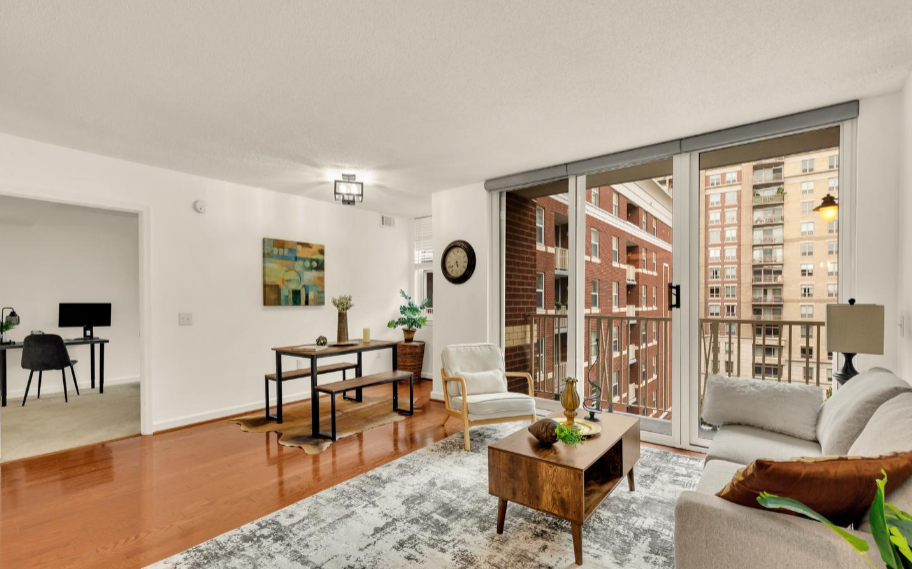
The emotional mechanics behind how buyers respond to a staged environment are explored in detail here: https://harvardhomeservices.com/home-staging-dopamine-buyer-psychology-washington-dc/
Statement Mirrors: When a Decorative Object Takes Over a Room
One of the clearest examples of de-influencing in practice involves statement mirrors, a category that gets pushed constantly on social media and causes real problems in listing presentations.
The reason statement mirrors are so popular online is that they are highly photogenic. A wavy frame, an LED surround, an unusual silhouette all read immediately in a photograph and generate strong engagement. But what works on a screen and what works in a home being shown to buyers are two very different things. These kinds of pieces are not designed to support a space. They are designed to announce themselves. And the louder that announcement, the harder it becomes for everything else in the room to exist comfortably around it.
When a single decorative object redefines the entire personality of a room, the room stops feeling flexible and starts feeling locked into a very specific moment in time. Furniture, art, lighting, and the overall mood of the space all end up orbiting that one piece. For someone living in the home long term, that may feel bold and intentional. For a buyer walking through during a showing, it forces them to evaluate the seller’s taste rather than imagine their own life in the space.
A mirror’s job in a room is to bounce light, extend the perceived depth of a space, and quietly support what is already there. When the mirror itself becomes the loudest voice in the room, it has stopped doing its job and started creating a problem. Softer silhouettes, natural wood frames, and muted finishes accomplish everything a mirror should accomplish without forcing the rest of the room to compete with it.
Gimmicky Kitchen Gadgets: Clutter Dressed Up as Convenience
Kitchens are one of the clearest examples of the de-influencing principle applied to a selling situation. Clutter in a kitchen rarely comes from too much stuff in general. It usually comes from the wrong kind of stuff, specifically single-use gadgets and novelty appliances that felt like useful purchases at the time but now occupy counter space and drawer space without contributing anything meaningful to how the kitchen functions or feels during a showing.
A buyer walking through a kitchen that is crowded with appliances and gadgets does not see a well-equipped kitchen. They see a kitchen that is running out of room. Mini waffle makers, cotton candy machines, novelty gadgets bought from late-night infomercials, and single-purpose tools that get used twice before being pushed to the back of a cabinet all create visual and physical clutter that makes a kitchen feel smaller and harder to use than it actually is.
The standard Harvard Home Services recommends for kitchen presentation is straightforward: if it is not something a buyer would reasonably expect to find on the counter of a well-maintained kitchen, it should not be there during the listing. Tools that are flexible, functional, and easy to store away contribute to a kitchen that feels organized and spacious. Everything else is competing for a buyer’s attention in a room where their attention should be on the quality of the finishes and the functionality of the space itself.
Maximalist Design: When Everything Competes for Attention
Rooms built around bold colors, playful shapes, and dramatic furniture can photograph beautifully online and generate strong engagement on social media. Maximalist design and what the design world calls dopamine décor are genuinely expressive approaches to a living space, and they have real appeal for the people who live in them.
The problem for a listing is what happens when everything in a room is trying to be the star at the same time. When the seating is bold, the art is bold, the rug is bold, and the accessories are bold, a buyer’s eye has nowhere to land during the showing. There is no hierarchy, no visual pause, no sense of what is actually important in the space. The room feels noisy rather than inviting, and buyers who feel overstimulated during a showing do not move toward offers.
The fix is not removing everything expressive from the home. The fix is contrast. Bold pieces need quieter backgrounds to land against. Expressive elements need neutral supporting pieces that give them room to breathe. When a room has that structure, the personality reads as intentional rather than overwhelming, and buyers can appreciate it without feeling like the space is competing with them for attention.
The way a well-chosen accent piece functions in a professionally staged room is fundamentally different from how accumulated trendy décor functions in an occupied home: https://harvardhomeservices.com/ancient-chinese-horse-home-staging-washington-dc/
Acrylic Furniture: The Illusion That Does Not Hold Up
Acrylic furniture gets marketed as a sleek, modern solution for making small spaces feel larger. The logic is that transparent furniture visually disappears, reducing the perceived weight in a room. On paper it sounds like an intelligent staging choice. In practice it creates a different set of problems.
Scratches appear on acrylic immediately and never stop accumulating. Fingerprints catch the light in a way that is impossible to ignore. Larger pieces like desks, consoles, and dining tables often feel flimsy even when they are expensive, and rather than quietly disappearing into the background they reflect everything around them in a way that makes the room feel unsettled rather than calm. What was supposed to create a sense of lightness ends up drawing constant attention to its own deteriorating surface.
Glass is a substantially better option when transparency is the goal. It feels like a real material rather than a placeholder. It ages better, scratches less visibly, and when combined with a solid base in wood, metal, or stone, it creates a piece that feels anchored and intentional rather than temporary. The key distinction is that glass still reads as a design choice, while acrylic increasingly reads as something that is trying to disappear because it has nothing else to offer.
For sellers who have acrylic pieces in the home, this is a straightforward pre-listing conversation worth having. Swapping a visibly worn acrylic coffee table for something with more material substance requires minimal investment and meaningfully improves how the room photographs.
Novelty Bathroom Upgrades: Complexity Dressed Up as Luxury
Bathrooms are particularly vulnerable to the de-influencing problem because anything that promises to make a daily routine feel more special or effortless is an easy sell. LED showerheads that light up while the water runs, motion-sensor toothpaste dispensers, toilet night lights that glow in the dark, themed accessories designed to generate a reaction from guests. These items feel fun initially and make for good conversation, but they introduce complexity and visual clutter into a room that performs best when it is simple, predictable, and calm.
A bathroom has two jobs: to wake you up in the morning and wind you down at night. Novelty gadgets actively interfere with both. They require management, they draw attention to themselves in a space that benefits from restraint, and they date a bathroom in the same way that trendy statement pieces date a living room.
The standard for a bathroom that presents well to buyers is the same standard that defines high-end hospitality design: remove friction rather than add features. Layered, subtle lighting built into the architecture of the space rather than added on as an afterthought. A simple, curated palette that allows the quality of the surfaces to speak for themselves. Nothing that needs to be explained or managed during a showing. When a bathroom feels calm, clear, and easy to move through, that is when it actually starts to feel expensive. The quietest bathrooms are almost always the ones that photograph best and leave the strongest impression on buyers.
Why Simplicity Consistently Outperforms Personality in a Listing
Luxury homes, model homes, and professionally staged properties share one characteristic that is immediately apparent the moment you walk in. They feel calm. There is visual hierarchy. There is balance and breathing room between objects. Nothing is competing for attention with everything else. The furniture supports the space rather than dominating it. The accessories suggest a lifestyle rather than performing one.
This is one of the primary reasons professionally staged homes consistently outperform both vacant homes and cluttered occupied homes in buyer interest and perceived value. The absence of competition between elements is what allows buyers to experience the home rather than evaluate it.
This principle becomes even more important in the context of online listing photography, where most buyers in the Washington DC market make their first judgment about a property. Clean, well-presented rooms photograph better, feel larger in listing images, and allow buyers to focus on the home’s actual features rather than the seller’s belongings. In a competitive DMV market where buyers are scrolling through dozens of listings at a time, reducing visual distractions often creates more measurable impact than any single design addition.
Most homes do not feel off because they lack style. They feel off because too many things are trying to be important at the same time. A home does not need more personality before it sells. It needs stability. A few grounded decisions about materials, forms, and a neutral baseline palette do more for a listing than any number of trend-driven additions. Accents should function as accents, not as a constant performance competing for a buyer’s attention throughout the showing.
The difference between how a home performs digitally versus in person, and how staging bridges that gap, is covered here: https://harvardhomeservices.com/virtual-vs-physical-staging-washington-dc/
Stop Buying. Start Curating.
At Harvard Home Services, our pre-listing recommendations frequently involve removing rather than adding. Oversized furniture that compresses the perceived size of a room. Excess artwork that fragments wall space and creates visual noise. Collections that communicate personal history rather than lifestyle potential. Color choices specific enough to divide buyer opinion rather than unite it.
Every item removed gives buyers more room to emotionally connect with the property. The room does not feel empty when something is taken out. It feels larger, calmer, and more considered. That perception of space and care is exactly what buyers are responding to when they describe a home as feeling right.
Before spending money on another decorative object, the right question to ask is a simple one: will this help a buyer see the home, or will it draw attention to itself? That question, applied honestly to every surface and every corner of a listing, is often more valuable than any individual staging decision.
For sellers prioritizing which rooms to address first and where their budget will have the greatest impact: https://harvardhomeservices.com/which-rooms-to-stage-first-budget-washington-dc/
Work With Harvard Home Services
Harvard Home Services specializes in strategic home staging, photography, and property preparation throughout Washington DC, Maryland, and Northern Virginia. If you are preparing a listing and want to understand where de-influencing and professional staging can have the greatest impact, we are ready to help.
https://harvardhomeservices.com/contact/
https://harvardhomeservices.com/services/
https://harvardhomeservices.com/about/