
The 5 Most Successful Home Staging Techniques and Why They Work in Washington DC
Introduction
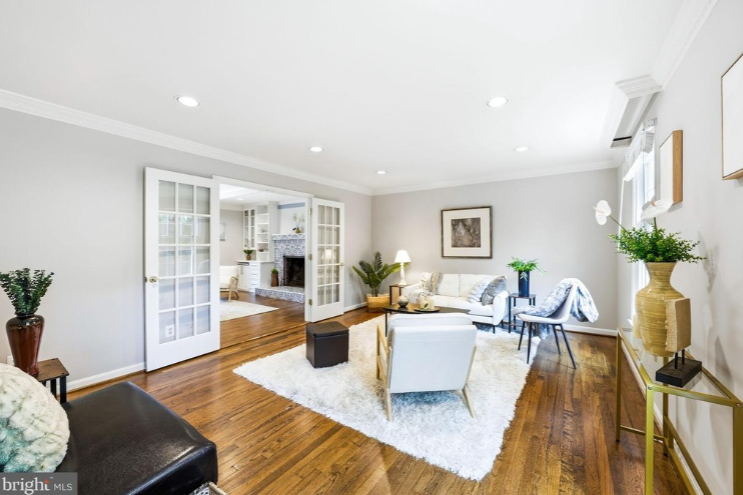
The most successful professionally staged homes are not necessarily the ones that look perfect. In fact, a home can become less appealing when everything feels too coordinated, too sterile, or too carefully designed. Buyers walking through a Washington DC listing are not looking for a showroom. They are imagining their future life, and a space that feels too manufactured or too precisely arranged can actually work against that process by making it harder for a buyer to see themselves inside it.
That is why the most effective home staging Washington DC creates something more powerful than perfection: personality. The right combination of furniture, textures, scale, lighting, art, and carefully selected accents allows buyers to emotionally connect with a property while still seeing themselves living there. The difference between a staged home that generates offers and one that generates compliments without action is almost always the difference between a space that feels authentic and one that feels assembled.
At Harvard Home Services, great staging is not about decorating a house until it looks beautiful. It is about understanding what makes a buyer stop, look, imagine, and ultimately act. These are the 5 techniques that produce that result consistently across Washington DC, Maryland, and Northern Virginia.
For a look at the neuroscience behind why staged environments trigger stronger buyer responses than empty ones: The Psychology of Staging: The Top 3 Psychological Triggers Buyers Experience in a Professionally Staged Home
1. Create a Lifestyle, Not a Furniture Display
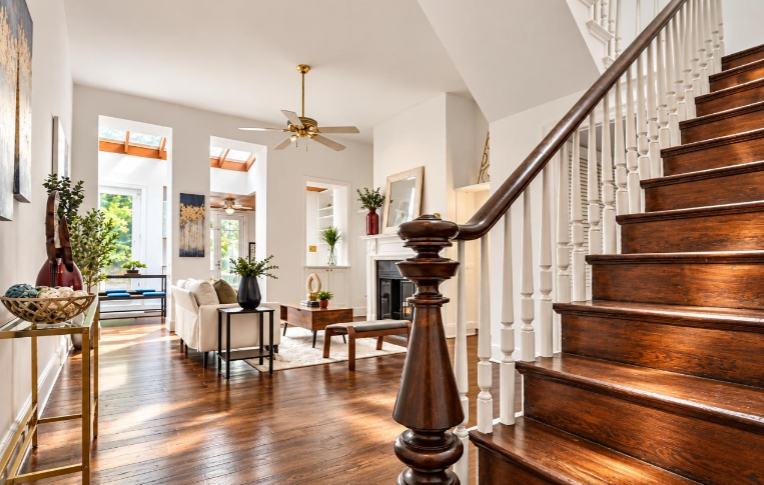
One of the most powerful and most consistently misunderstood staging techniques is the difference between placing furniture in a room and creating a recognizable lifestyle within it. Furniture establishes function. Staging creates emotion. These are not the same thing, and the distinction between them is what separates a room that reads as staged from a room that reads as lived in.
A living room should suggest something specific: conversation among friends, quiet evenings, the particular kind of relaxation the space is built for. A dining area should make a buyer immediately imagine having people over. A bedroom should communicate comfort and retreat in a way that feels personal rather than generic. When buyers can understand immediately how a space could fit into their actual lives, the property becomes easier to remember and easier to desire. Simply placing attractive furniture in an empty room does not achieve that. It fills the space. It does not tell the story the space is capable of telling.
This is one of the most important principles in home staging Washington DC because DC metro buyers are evaluating dozens of properties simultaneously, most of which are showing them furniture in rooms. The listings that stand out are the ones where a buyer walks in and immediately recognizes a version of the life they want.
For a detailed look at how Harvard Home Services has applied lifestyle staging across specific DC metro properties with documented Days on Market results: A Day in the Life of a Washington DC Home Staging Company
2. Use Textures to Create Personality
Color gets attention. Texture creates depth. This is one of the most reliable principles in home staging Washington DC, and it is one that is consistently underused in favor of color choices that feel bold in person but photograph as noise.
Velvet, natural wood, glass, metal, linen, leather, woven materials, stone, plants, and soft textiles give a room visual and tactile interest without overwhelming the architecture or competing with the buyer’s ability to imagine their own belongings in the space. A room built around textures can feel warm and luxurious while remaining neutral enough for a buyer to see themselves making it their own. That combination of warmth and neutrality is exceptionally difficult to achieve through color alone.
This is especially important in the Washington DC and DMV market, where sophisticated buyers, attorneys, executives, diplomats, and physicians who have been inside world-class properties, often respond more strongly to homes that feel refined than to homes that feel decorated. The distinction is subtle but it is consistent. Refinement comes from the layering of materials and surfaces. Decoration comes from the selection of objects. The best home staging Washington DC is built on the former.
For a deeper explanation of how material and texture decisions fit into the broader staging philosophy at Harvard Home Services: The Alchemy of Home Staging in Washington DC
3. Do Not Make Every Room Match
One of the most common and most damaging mistakes in home staging is treating an entire property like a furniture showroom, with every room coordinated to match every other room, every piece selected from the same palette, every surface the same tone. The result is a home that photographs cleanly and feels completely forgettable in person.
Successful home staging Washington DC creates harmony, not uniformity. A beautiful accent chair that does not match the sofa introduces personality. A distinctive piece of art gives a room a focal point that a buyer will carry with them after the showing. A subtle accent object, an interesting lamp, a sculptural element, or a carefully chosen plant makes a room feel collected rather than manufactured. These details work because they create visual memory. Buyers may not consciously catalog every object they saw in a listing, but they consistently remember how a home made them feel, and the homes that feel collected and considered leave a fundamentally different impression than the homes that feel assembled.
This principle connects directly to the intentional imperfection theory that Harvard Home Services has applied across recent DC listings, including the deliberate staging choices at 3220 Warder Street NW that produced stronger buyer identification precisely because the room did not look perfect. A staging team that understands the difference between harmony and uniformity, and that is confident enough to introduce deliberate contrast and personality, is producing a different category of result.
For the full breakdown of how rational and irrational buyer triggers interact with staging decisions across a Washington DC listing: What Happens in a Buyer’s Mind When They Walk Through Your Listing
4. Respect the Architecture
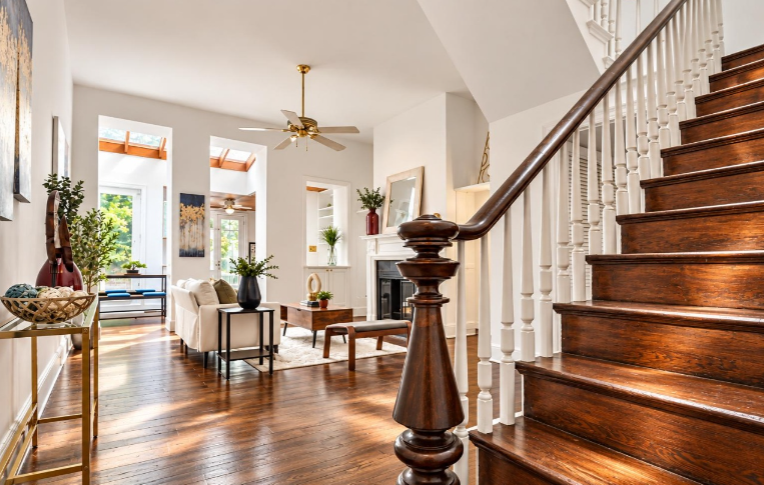
Professional home staging Washington DC should never compete with the property it is staging. If a home has beautiful windows, interesting millwork, hardwood floors, a fireplace, high ceilings, an exceptional view, or any other architectural feature that contributes to its value, every staging decision should be made in service of directing the buyer’s attention toward those features rather than away from them.
This is where professional judgment separates competent staging from exceptional staging. The right furniture scale can make a small room feel significantly larger than its actual square footage. Correct placement improves circulation and makes a floor plan feel intuitive rather than confusing. Mirrors amplify light and create depth in rooms that would otherwise feel compressed. Carefully positioned lighting makes architectural details feel more luxurious than they would under standard overhead lighting. The goal is not to hide the house beneath beautiful furnishings. The goal is to make the house look better because the furnishings are there. When staging achieves that, the architecture and the staging operate as a single unified experience rather than two separate things the buyer is processing simultaneously.
For a look at how this principle applies specifically to entry and foyer staging, which is where architectural first impressions are most frequently lost or won: The Foyer Sells the Home Before You Do
5. Leave Room for the Buyer’s Imagination
Personality does not mean clutter, and this is the tension at the center of every staging decision Harvard Home Services makes. The most successful home staging Washington DC provides enough visual interest to create emotion while leaving enough space for buyers to imagine their own possessions, routines, family, and personality within the home. That balance is the real art of staging, and it is the one that is most difficult to calibrate because it sits at the intersection of enough and too much.
A completely empty house can feel cold and difficult for buyers to interpret. Research consistently shows that empty rooms read as smaller than their actual dimensions, that buyers presented with an empty space are forced to do cognitive work that staged rooms do for them, and that this additional cognitive effort reduces both the emotional response to the property and the perceived value of the space. But an over-staged house creates the opposite problem: it feels like someone else’s home, and the buyer’s imagination has no room to operate inside it.
The ideal environment sits between the two extremes: beautiful enough to inspire and neutral enough to belong to the buyer. Achieving that balance consistently, across different property types, different price points, and different buyer demographics, is what distinguishes a professional staging team from a furniture placement service. It requires understanding not just what makes a room look good but what makes a specific buyer want to stay in it.
For Realtors preparing sellers for the staging conversation and for sellers who want to understand what the preparation process actually involves before a listing goes live: How to Select the Right Home Staging Company
Before:
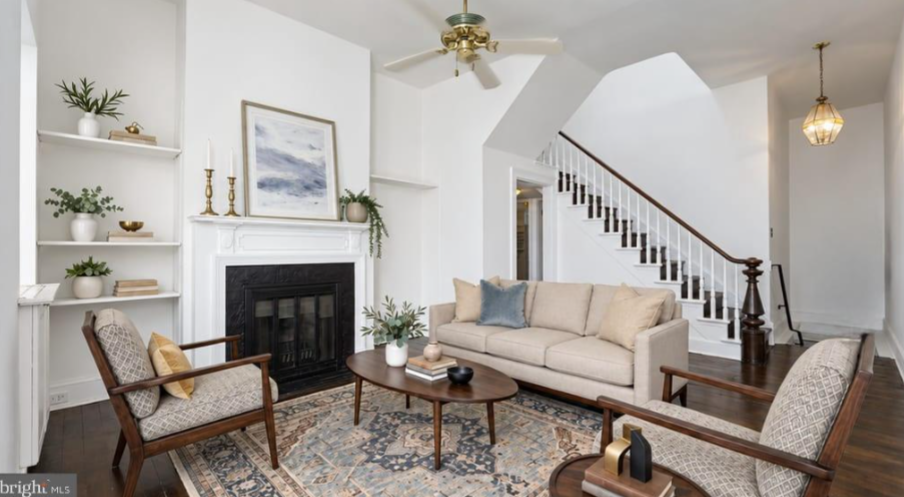
After:
Conclusion
Perfection is often forgettable. Personality is memorable. The 5 techniques above work because they recognize something fundamental about how buyers actually make decisions: they do not purchase square footage, rooms, countertops, or flooring in isolation. They purchase the possibility of a life. And the homes that communicate that possibility most clearly, through lifestyle rather than furniture display, through texture rather than color, through harmony rather than uniformity, through architecture rather than decoration, and through imagination rather than saturation, are the homes that buyers remember when they are sitting across the table from their agent deciding where to write an offer.
At Harvard Home Services, the approach to home staging Washington DC is built entirely around that idea. Furniture, lighting, texture, scale, art, accessories, and spatial psychology are used together to create homes that feel authentic, sophisticated, and emotionally compelling to the specific buyer profile each property is most likely to attract. The objective is never to create a perfect house. It is to create the house a buyer does not want to leave.
For Realtors whose sellers need the flexibility of deferred costs to make professional staging accessible before the listing goes live: What Every DMV Realtor Needs to Know About Staging for an Estate Sale
And for a look at recent staging work across Washington DC, Maryland, and Northern Virginia: Recent Staging Projects
Zero percent financing for sixty days. $650 to get started. Balance due at settlement.
Ready to Stage Your Next Listing?
Harvard Home Services partners with Realtors throughout Washington DC, Maryland, and Northern Virginia to prepare listings for market at the highest level. Services include:
- Professional home staging
- Luxury staging
- Real estate photography coordination
- Property preparation and cleaning
- Pre-listing consulting
Zero percent financing available for your sellers. $650 to get started, with the balance due at settlement from the proceeds of the sale.
William Milewski 202-361-5858 william.harvardhomeservices@yahoo.com
David Van Leeuwen 630-441-8000 david.harvardhomeservices@yahoo.com
Follow us on Instagram: instagram.com/harvardhomeservices
Find us on Thumbtack: Harvard Home Services on Thumbtack